01The question
It's back from theatre. Does it go back on the shelf?
Today the answer depends on a clock. With Hematag it depends on proof: where the unit went, for how long, and at what temperature.
In development — this site describes the product as it will be, not an off-the-shelf offer. We are talking with transfusion services to shape it.
- 14:02IssuedBlood bank
- 14:09ReceivedOR 3
- 14:54ReturnedBlood bank
- Minimum
- 3.1 °C
- Maximum
- 5.8 °C
- Decision
- Return
- 02
The real problem
You decide with a clock, not with proof.
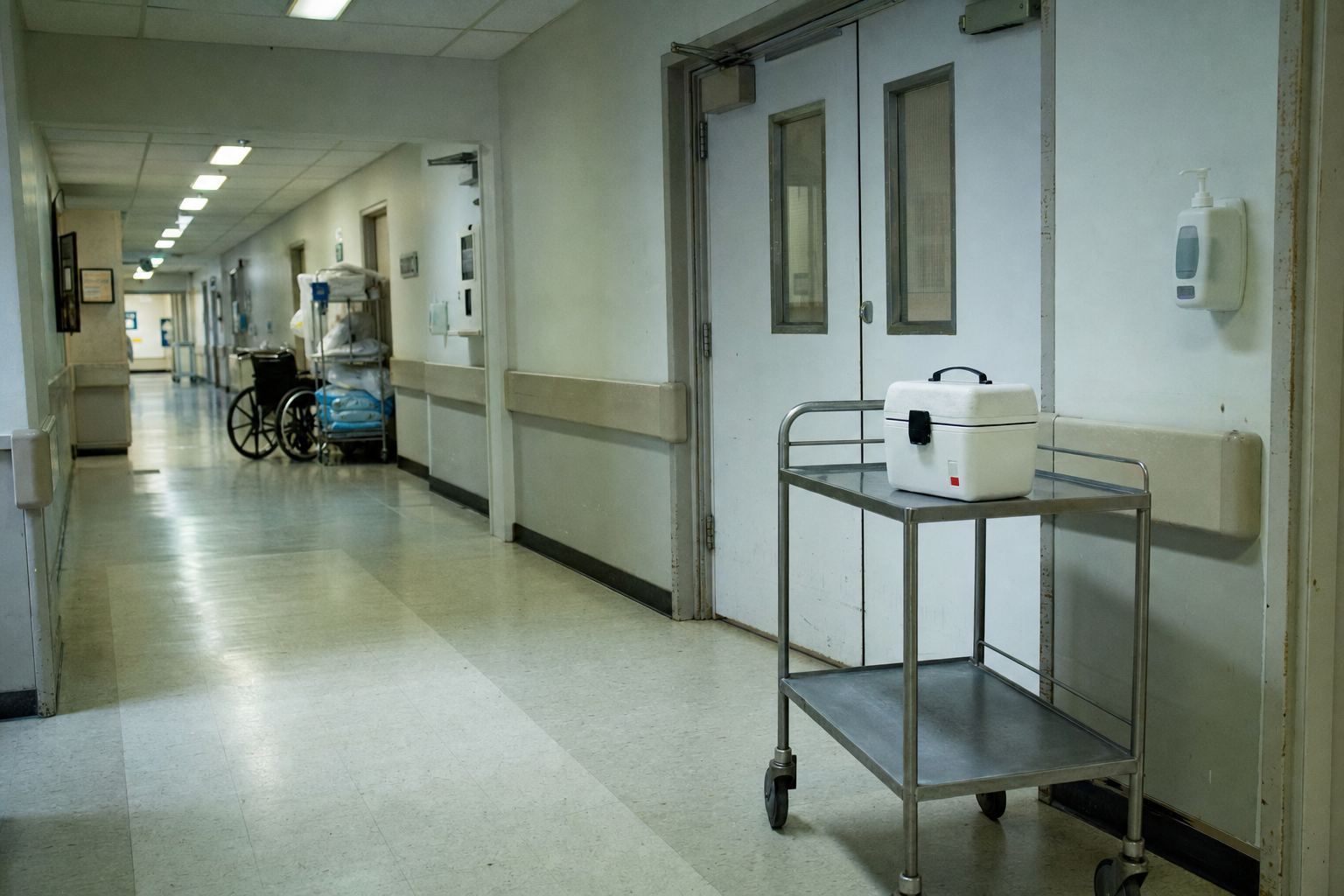
The bank knows when the unit left and when it came back. Not where it waited in between, or how warm it got: straight to theatre, or 40 minutes on a cart in a corridor.
- 03
What has been tried
Every rule tried so far errs one way or the other.
The 30-minute rule, then 60, then a single check at return have all been tried. None of them shows what happened between issue and return.
- 60 min
- in Canadian practice, beyond which a returned unit is discarded without its temperature ever being measured
- Canadian transfusion practice, extended from 30 min
- +13 %
- additional waste when a single spot-check is taken at return
- DeSimone, Transfusion 2018
- 15.2 %
- of red cell units would have been accepted by the 30-minute rule despite being outside the allowed temperature
- DeSimone, Transfusion 2018
- 04
What you get
Every unit comes back with its record.
The trail
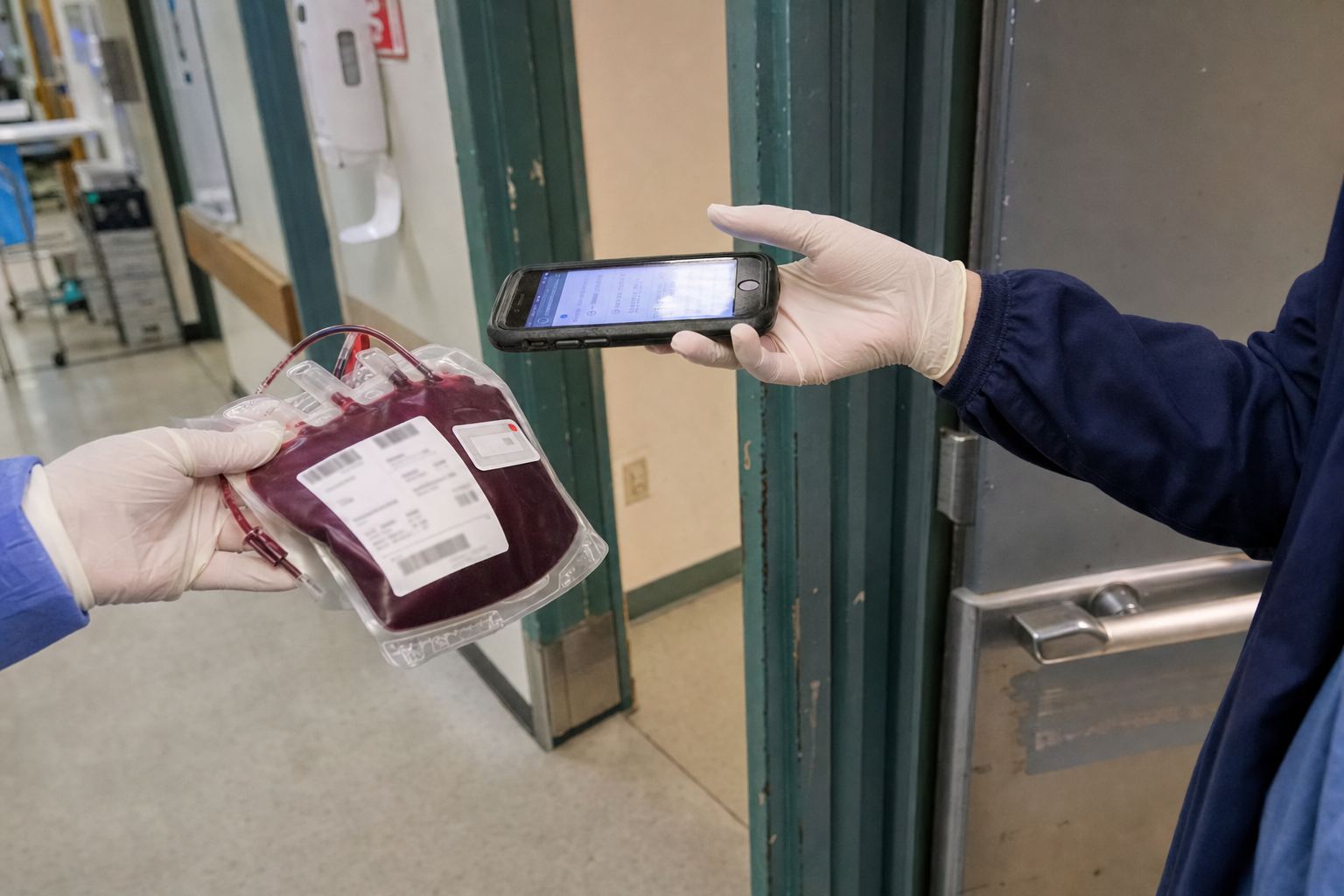
Who had it, where and when, at every hand-off. Waiting time becomes a measured number.
The curve
Continuous temperature between every hand-off, from a sensor calibrated in our accredited laboratory.
The decision
Return to inventory, discard or quarantine, by your site's rules, recorded with its reasons.
- 05
What might hold you back
The questions we get, answered plainly.
- Another device for my staff to manage?
- Staff scan the unit with a phone at each hand-off. The technologist reads the record at their station.
- Does it fit the regulation?
- It builds on what the Blood Regulations already allow: showing transport conditions with a data logger (s. 76 and s. 101).
- Will it cut our wastage?
- We have no measured figure yet. We will publish the numbers from our first pilot site, not a projection.
- Does it replace our fridge monitoring?
- No. Your fridges keep their monitoring. Hematag covers the unit once it leaves them.
- 06
The next step
Let's talk about your at-risk units
The economics only work if you instrument the units that genuinely leave the fridge — not every bag in the bank. A first conversation is enough to establish which units matter for you.
Get in touch