The product
One tag per unit: every hand-off, every degree
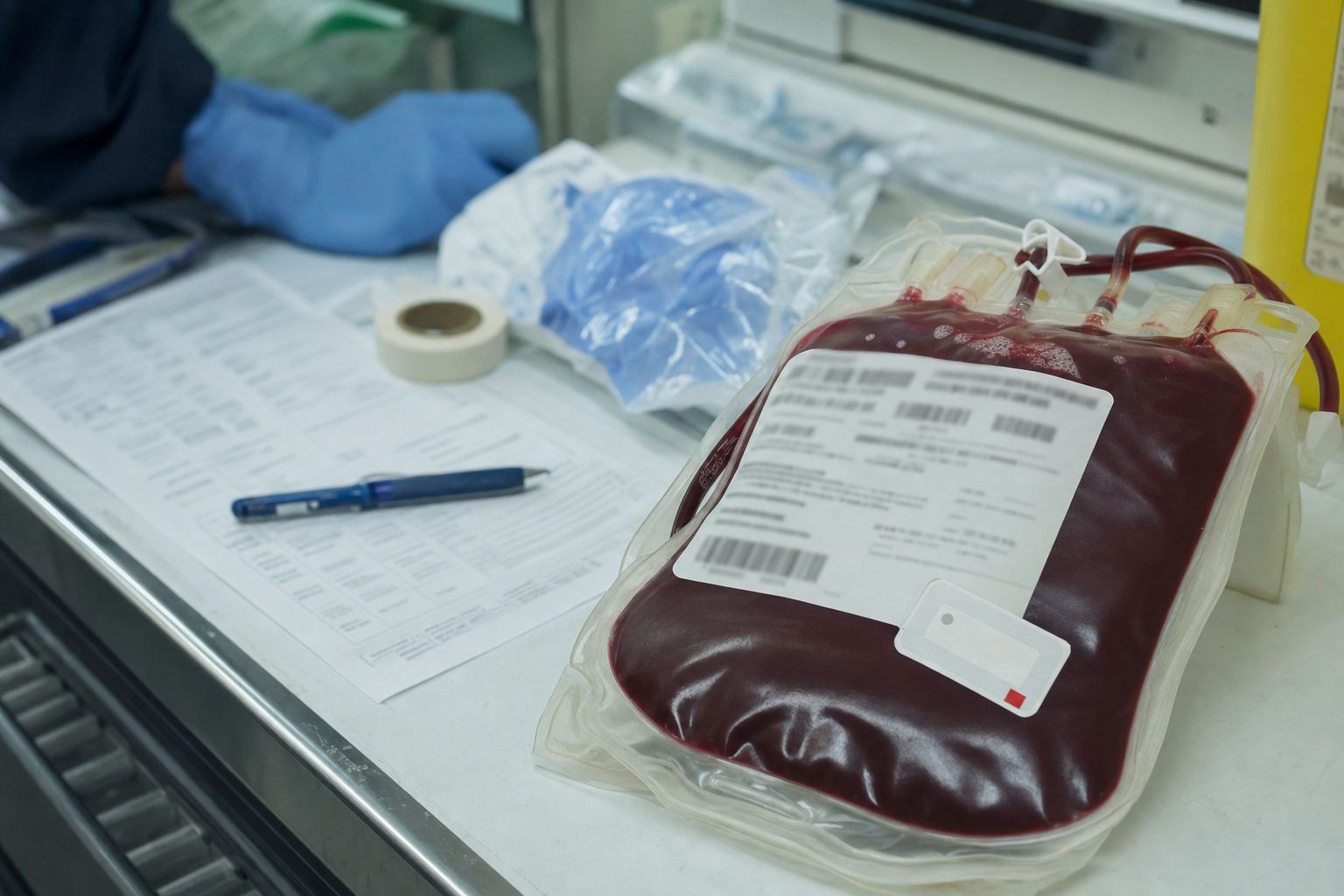
Hematag is not another thermometer in the cold chain. It is the unit's record: where it went, who had it, for how long and at what temperature, so every return is a documented decision rather than a guess.
 01
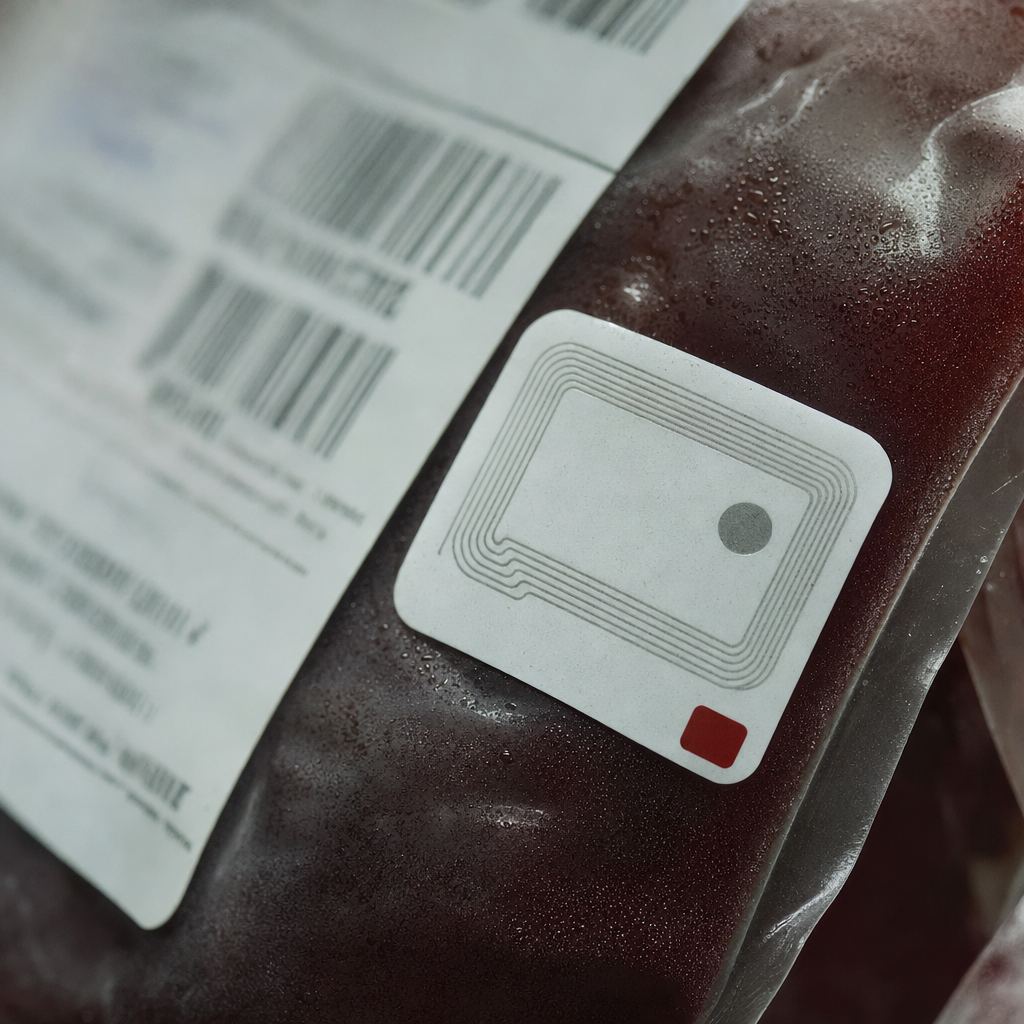
Tag on every unit
An autonomous logger attached to each bag. It measures continuously through every period the unit spends outside controlled storage — at the bank, in theatre, at the bedside, and back again.
 02
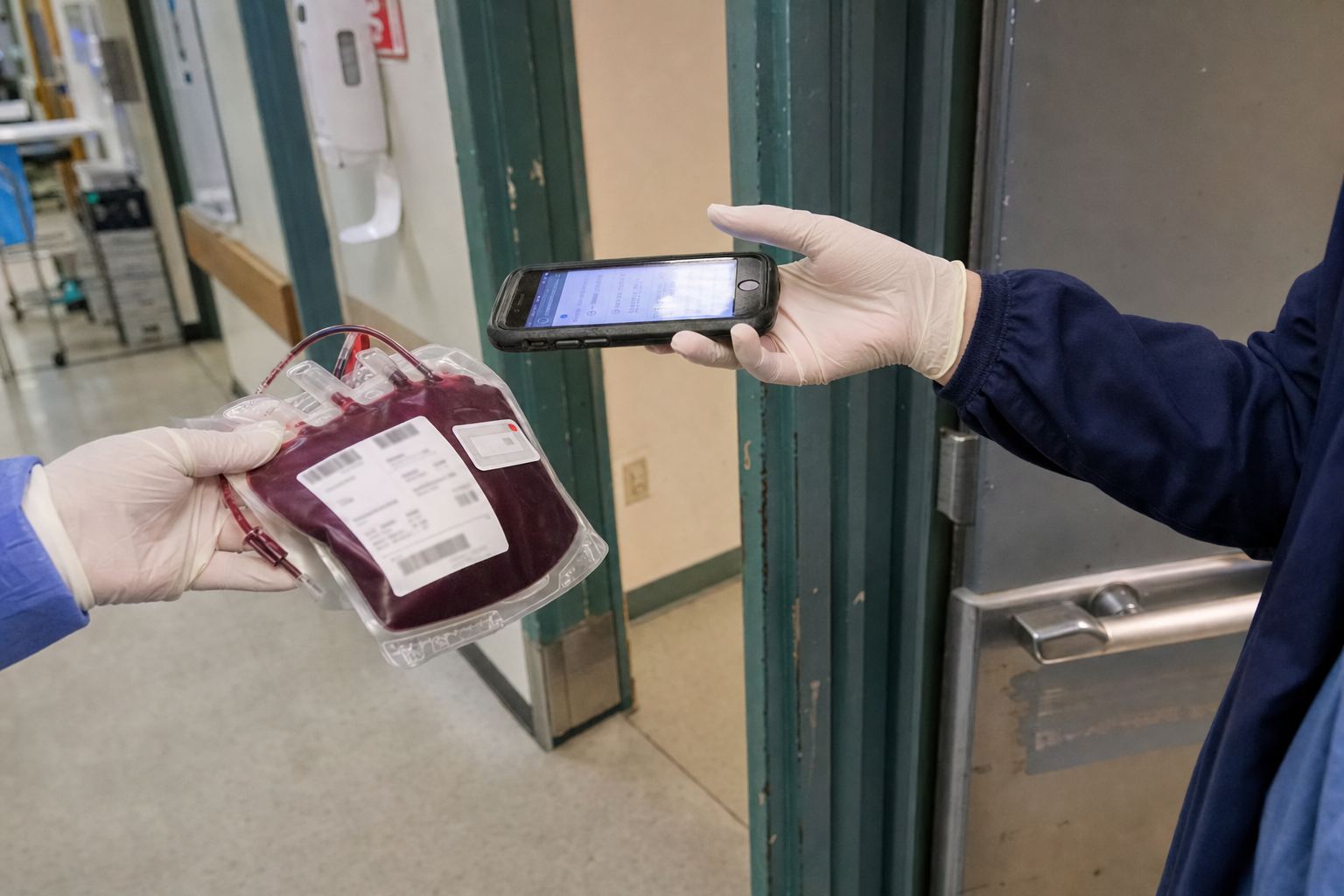
Scanned at every hand-off
Each time the unit changes hands (issued at the bank, received in theatre or ICU, sent back) a phone scan records who, where and when. Time spent at each place becomes a measured number.
 03
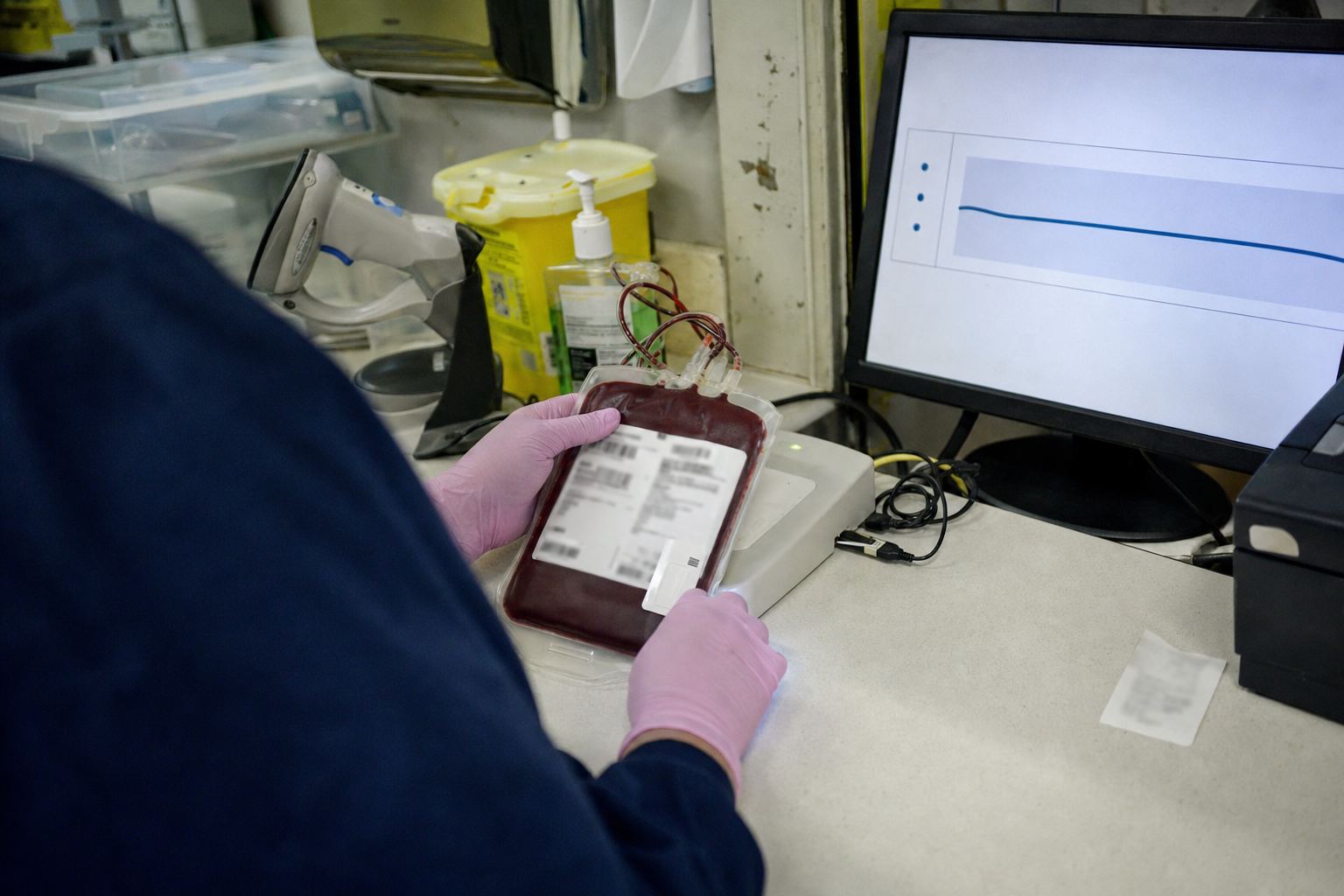
A documented decision
At return, the technologist reads the curve and the trail together. The platform applies your site's rules and records the decision (return to inventory, discard or quarantine) with its reasons, as the traceability record the regulation requires.
 04
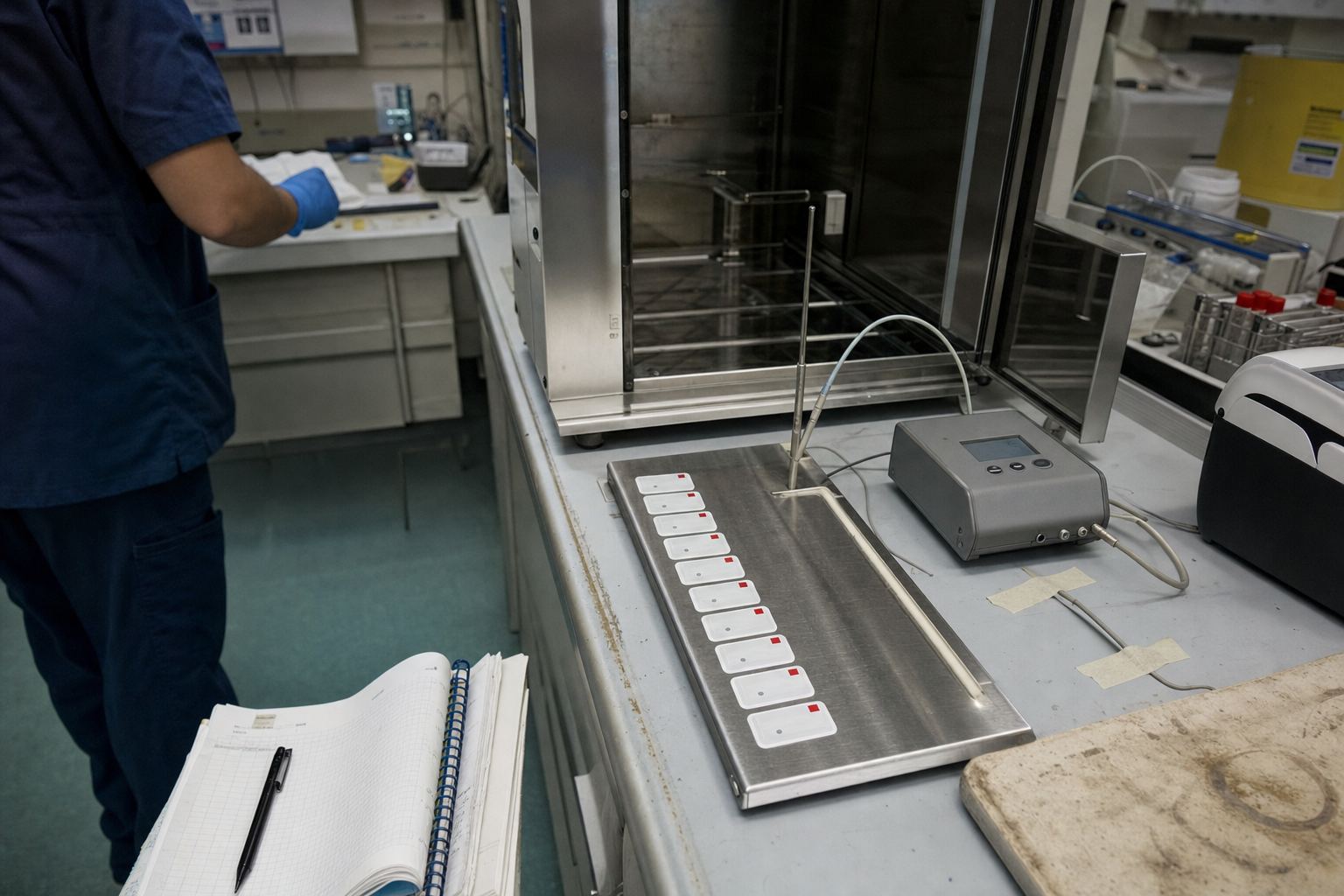
Accredited calibration
The sensors are calibrated in our accredited laboratory. Calibrated storage equipment is a regulatory requirement, and it is the part of the chain we control end to end.
The problem
The time rule is a clock, not a measurement
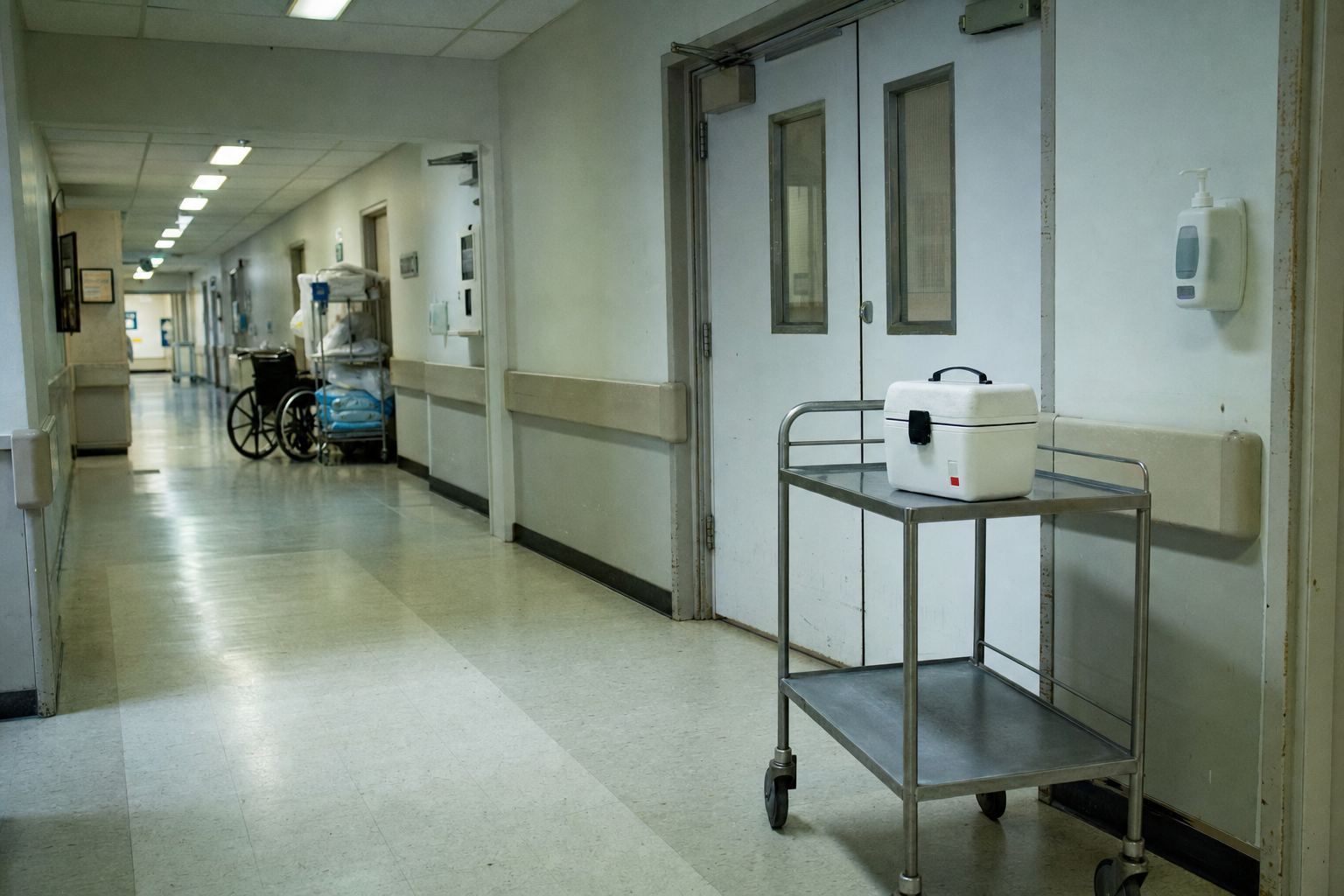
A red blood cell unit that left controlled storage outside a validated container is accepted back or discarded on elapsed time, not on its actual temperature: 30 minutes historically, 60 in current Canadian practice. The rule substitutes a clock for a measurement.
The approximation fails in both directions. In a two-year hospital study of the 30-minute rule (DeSimone, Transfusion 2018), the rule would have accepted units outside the allowed temperature, and replacing it with a single temperature check at return raised wastage by 13 %. Neither a clock nor a single reading shows what happened in between.
And the clock itself rests on paper. The bank knows when a unit left and when it came back, not where it was in between: whether it went straight to theatre or waited 40 minutes on a cart in a corridor. The proof is a procedure, not a record.
- 60 min
- in Canadian practice, beyond which a returned unit is discarded without its temperature ever being measured
- Canadian transfusion practice, extended from 30 min
- +13 %
- additional waste when a single spot-check is taken at return
- DeSimone, Transfusion 2018
- 15.2 %
- of red cell units would have been accepted by the 30-minute rule despite being outside the allowed temperature
- DeSimone, Transfusion 2018
The problem is real and regulated. The Blood Regulations already allow an establishment to show that storage conditions were met in transport with a data logger, rather than a validated container alone (Health Canada guidance, s. 76 and s. 101).